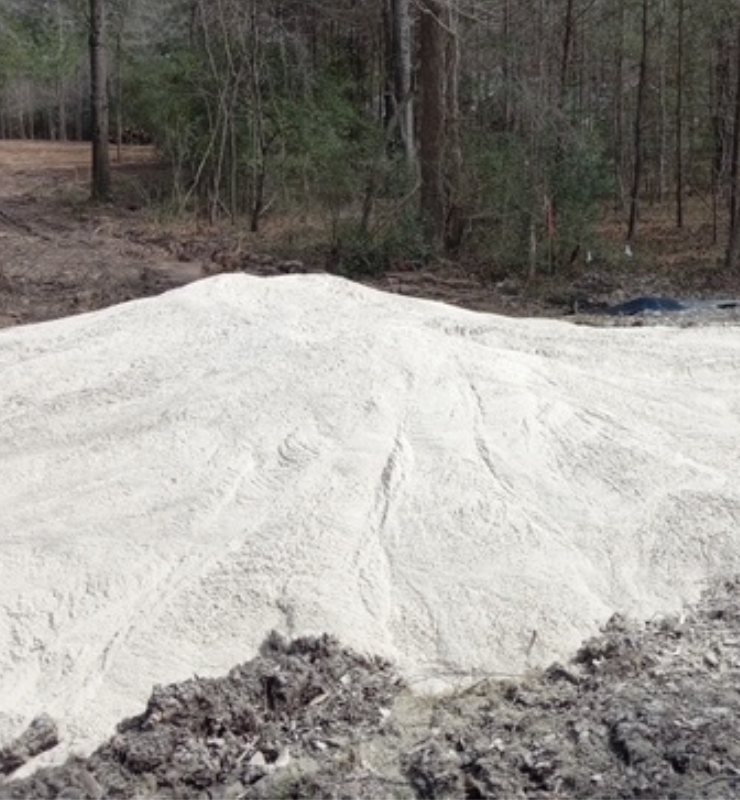
Texas soils demand the right stabilizer. Fly ash and lime are both proven, both TxDOT-specified, and both available from Hasten Chemical. Here is a direct comparison.
How Fly Ash Stabilizes Soil
Fly ash is a pozzolanic byproduct of coal combustion. When mixed into soil with water, calcium compounds in fly ash (especially Class C) react to form calcium silicate hydrate, the same compounds that give concrete its strength. The reaction is slower than lime but produces excellent long-term compressive strength.
How Lime Stabilizes Soil
Lime (hydrated lime, quicklime, or lime slurry) reacts immediately with clay minerals through cation exchange, reducing plasticity within hours. This makes lime ideal on very high-plasticity soils, it dries the soil and makes it workable fast.
TxDOT Specifications
| Material | TxDOT Item | Application |
|---|---|---|
| Fly ash (road-mixed) | Item 265 | Subgrade stabilization |
| Lime (road-mixed) | Item 260 | Subgrade stabilization |
| Lime (base courses) | Item 262 | Base course treatment |
| Fly ash-lime blend | Items 265 / 266 | Subgrade and base |
Fly ash must meet TxDOT DMS-4615. Lime must meet DMS-6350. Both require mix design under Tex-127-E.
Head-to-Head Comparison
| Factor | Fly Ash | Lime |
|---|---|---|
| Best for soils with PI | Under 25 | Above 25 |
| Speed of reaction | Slower (days to weeks) | Fast (hours) |
| PI reduction | Moderate | High |
| Long-term strength | Very good | Good |
| Cost (general) | Lower | Higher |
| TxDOT item | Item 265 | Item 260 / 262 |
When to Use Fly Ash
- Subgrade soils with PI under 25
- Road base stabilization where long-term strength is the priority
- Oilfield, pipeline, and industrial site prep
- Cost-sensitive projects with moderate PI requirements
When to Use Lime
- High-plasticity Texas black clay (PI above 25)
- Soil too wet and sticky to work with fly ash alone
- First pass to dry and reduce PI before fly ash treatment
- Blackland Prairie and coastal clay projects
When to Use Both, Fly Ash-Lime Blend
On the most challenging Texas soils, the answer is the fly ash-lime blend (LFA). Lime handles PI reduction immediately; fly ash builds compressive strength over time. TxDOT Items 265 and 266 govern LFA treatment. Read our full guide to fly ash-lime blending.
Get Fly Ash or LKD for Your Project
Hasten Chemical supplies Class C and Class F fly ash (DMS-4615) and lime kiln dust across Texas. Bulk delivery to Houston, DFW, San Antonio, Austin, Midland-Odessa, and beyond. Contact us for pricing.
The Role of Plasticity Index in Choosing Between Fly Ash and Lime
Plasticity Index (PI) is the single most important factor in deciding whether fly ash, lime, or a blend is right for your soil. PI measures the range of moisture content over which a soil behaves plastically, the higher the PI, the more expansive and difficult the clay.
TxDOT and most geotechnical engineers use PI thresholds to guide material selection
- PI under 15: Soil may not need stabilization, or fly ash alone is sufficient
- PI 15–25: Fly ash is typically effective as a standalone stabilizer
- PI 25–40: Fly ash-lime blend (LFA) is often the best choice
- PI above 40: Lime pre-treatment followed by fly ash, or lime alone
Texas Blackland Prairie soils commonly have PI values of 40–60, which is why lime and LFA blends are so prevalent on TxDOT highway projects in that region. Gulf Coast clays around Houston frequently run PI 30–45.
Cost Comparison, Fly Ash vs Lime in Texas
Fly ash is generally less expensive per ton than hydrated lime. However, application rates differ, fly ash is typically applied at 8–14% by dry weight of soil, while lime is applied at 4–6%. The net cost difference depends on your specific soil, treatment depth, and local material pricing.
On balance, fly ash treatments on moderate-PI soils tend to come in at lower total cost than lime treatments on the same soil. On high-PI soils where lime is required, the faster construction schedule (lime dries soil faster) can offset some of the material cost premium.
Environmental Considerations
Both fly ash and lime are industrial byproducts used beneficially in soil stabilization. Using fly ash diverts material from coal ash disposal sites and reduces the need for virgin aggregate. Fly ash used in soil treatment must comply with TxDOT DMS-4615, which includes requirements that protect against leaching of heavy metals.
Frequently Asked Questions, Fly Ash vs Lime
Can you use fly ash and lime on the same project?
Yes, this is the fly ash-lime blend (LFA), governed by TxDOT Items 265 and 266. It combines the fast PI reduction of lime with the long-term strength of fly ash, and is often the best solution on high-plasticity Texas clay soils.
Which material gives better long-term road performance?
Fly ash generally produces higher long-term compressive strength than lime alone, particularly on moderate-PI soils. On very high-PI soils, an LFA blend typically outperforms either material used alone. The best answer depends on your specific soil and design requirements.
Is fly ash approved for TxDOT subgrade stabilization?
Yes. TxDOT Item 265 specifically covers fly ash and lime-fly ash treatment of subgrade. Fly ash must meet DMS-4615. Mix design is verified per Tex-127-E with a minimum 160 psi compressive strength requirement.
Does Hasten Chemical supply both fly ash and lime products?
Hasten Chemical supplies Class C and Class F fly ash meeting TxDOT DMS-4615, as well as lime kiln dust (LKD). We serve contractors and project engineers across Texas with bulk delivery by pneumatic tanker. Contact us for pricing on your next project.
What is the minimum order for fly ash delivery in Texas?
Contact Hasten Chemical directly for current minimum order and lead time information. We serve both large TxDOT highway projects and smaller private stabilization jobs across the state.