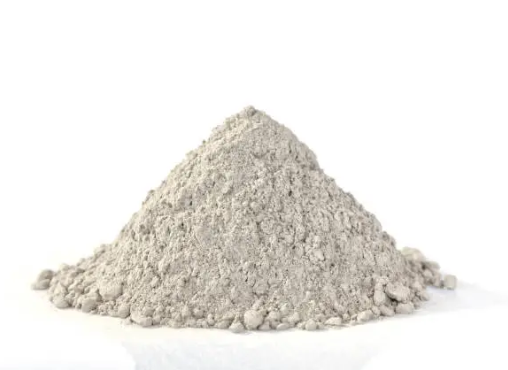
Two of the most widely used industrial byproduct stabilizers in Texas are cement kiln dust (CKD) and fly ash. Both are effective and cost-competitive, and Hasten Chemical supplies both. But they have real differences in chemistry, performance, and TxDOT specification coverage.
What Is Cement Kiln Dust?
Cement kiln dust is a fine powder collected from the exhaust gases of Portland cement kilns. It contains free lime (CaO), calcium silicates, calcium aluminates, and alkali sulfates. The exact chemistry varies by plant, which is why CKD is always characterized before use in stabilization. High free-lime CKD behaves more like lime; low free-lime CKD behaves more like fly ash.
What Is Fly Ash?
Fly ash is a fine byproduct of coal combustion. Class C fly ash (high calcium) is self-cementing and widely used as a standalone stabilizer. Class F fly ash (low calcium) requires an activator such as lime. TxDOT DMS-4615 establishes clear chemical requirements for both types.
CKD vs Fly Ash, Head-to-Head
| Factor | Cement Kiln Dust | Fly Ash (Class C) |
|---|---|---|
| Reaction type | Cementitious + pozzolanic (varies) | Pozzolanic (self-cementing) |
| PI reduction speed | Fast (if high free lime) | Moderate |
| Long-term strength | Good to very good | Very good |
| Chemistry consistency | Variable by source | More consistent |
| TxDOT spec item | Item 275 | Item 265 |
| Material spec | DMS-4620 | DMS-4615 |
| Texas availability | Good (Midlothian, Odessa area) | Good statewide |
When to Use CKD
- Fly ash supply is constrained and CKD is locally available
- High-plasticity soils needing fast PI reduction (high free-lime CKD)
- Engineer has approved a CKD mix design
- West Texas and Permian Basin projects near cement plants
When to Use Fly Ash
- Long-term compressive strength is the primary design goal
- Moderate plasticity soils (PI under 25)
- Consistent, well-characterized material needed for QC
- TxDOT Item 265 projects statewide
Can You Blend CKD and Fly Ash?
Yes. TxDOT-sponsored research (FHWA/TX-86/19+284-3) found kiln dust-fly ash systems effective for highway bases and subbases. The mix design must be verified by the project engineer before use on a TxDOT project.
CKD and Fly Ash Supply in Texas
Hasten Chemical supplies both cement kiln dust and Class C and Class F fly ash (meeting DMS-4615) across Texas. Bulk delivery by pneumatic tanker to Houston, DFW, San Antonio, Austin, Midland-Odessa, and beyond. Learn more about our CKD supply, or contact us for pricing.
Understanding CKD Chemistry Variability
The biggest practical difference between CKD and fly ash for project engineers is variability. Fly ash from a given power plant tends to be consistent in chemistry from load to load, because coal combustion is a controlled process. CKD chemistry, by contrast, can vary significantly depending on the type of cement being produced, the kiln fuel mix, and collection point in the kiln system.
Free lime (CaO) content in CKD typically ranges from 10% to 45% depending on source. High free-lime CKD behaves more like lime, fast PI reduction, good immediate workability. Low free-lime CKD relies more on pozzolanic reactions and behaves more like fly ash. This variability is why TxDOT DMS-4620 and Item 275 require material characterization before use, and why mix designs must be developed for the specific CKD source being used.
For contractors, this means you cannot simply substitute one CKD source for another mid-project without re-verifying the mix design. With fly ash, source substitutions are more straightforward as long as the new source meets DMS-4615.
Availability and Logistics in Texas
Texas has significant cement production capacity, particularly around Midlothian (near Dallas-Fort Worth) and in the Odessa area. Projects in those regions often have good CKD availability at competitive pricing. In other parts of Texas, Houston, San Antonio, the Rio Grande Valley, fly ash may be more readily available and logistically simpler to procure.
Both materials are delivered in bulk by pneumatic tanker truck. Hasten Chemical maintains supply relationships for both CKD and fly ash statewide, so we can advise on which material is most cost-effective and available for your specific project location.
Sulfate Considerations with CKD
One important engineering consideration with CKD is sulfate content. Some CKD sources have elevated sulfate levels, which can cause heaving in treated soils if free sulfates react with the soil minerals. This is called sulfate-induced heave and is a known issue with certain stabilizers on sulfate-bearing soils.
Before specifying CKD on a project, the project engineer should verify the sulfate content of both the CKD and the native soil. TxDOT’s stabilization guidelines address this issue. Fly ash generally has lower sulfate-related risk than high-sulfate CKD sources.
Frequently Asked Questions, CKD vs Fly Ash
What TxDOT specification governs CKD treatment?
TxDOT Item 275 covers Cement Kiln Dust Treatment. Material must meet DMS-4620. Mix design is developed similarly to fly ash under the applicable test methods.
Is CKD cheaper than fly ash?
Pricing depends on location and source. Near Texas cement plants (Midlothian, Odessa), CKD can be very competitive. In other regions, fly ash may be lower cost. Contact Hasten Chemical for current pricing at your project location.
Can CKD be used on TxDOT projects without a special provision?
CKD is covered under TxDOT Item 275 in the standard specifications. A special provision is not required if the project plans specify Item 275 and the material meets DMS-4620.
What is sulfate-induced heave and does it affect CKD-treated soils?
Sulfate-induced heave occurs when sulfates in the stabilizer react with soil minerals (particularly montmorillonite clays) to form expansive compounds. CKD with high sulfate content can cause this on susceptible soils. Always verify CKD sulfate levels and native soil sulfate content before specifying CKD on a project.
Does Hasten Chemical supply both CKD and fly ash?
Yes. Hasten Chemical supplies cement kiln dust and Class C and Class F fly ash (meeting TxDOT DMS-4615) across Texas. We can advise on the best material choice for your project location and soil conditions. Contact us for pricing and availability.